

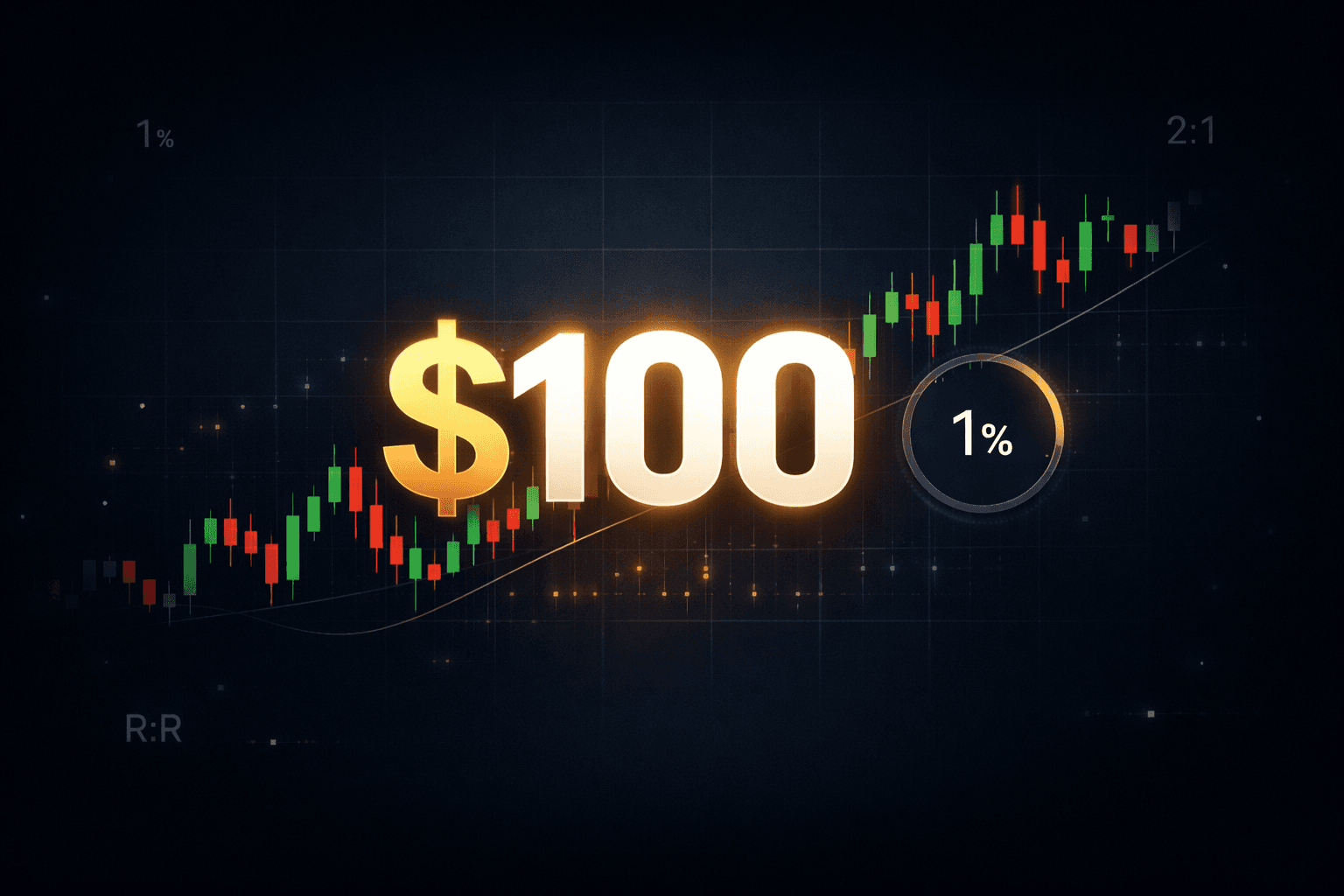
¿Se pueden ganar $100 al día haciendo trading de cripto?
La mayoría de guías se saltan la parte difícil. Aquí tienes las matemáticas reales detrás del objetivo de $100/día, por qué la mayoría de traders fracasan y las herramientas que te dan una ventaja real — sin bombo, sin falsas promesas.
Seamos honestos sobre algo que la mayoría de artículos sobre cripto no te dicen.
Sí, es posible ganar $100 al día haciendo trading de cripto. Hay gente que lo hace. Pero la mayoría que lo intenta, no lo logra. Estudios sugieren que entre el 80% y el 95% de los day traders pierden dinero en general. No porque sean tontos — sino porque ignoran las matemáticas, no gestionan el riesgo y operan dejándose llevar por las emociones.
Este artículo no te va a dar "5 trucos fáciles" y pretender que lo demás es simple. En cambio, vamos a hacer lo que casi nadie hace: mostrarte las matemáticas reales, los requisitos reales y las herramientas reales que separan al pequeño porcentaje que lo logra de la mayoría que no.
Si esa honestidad te echa para atrás, este artículo no es para ti. Si te hace prestar más atención — sigue leyendo.
Las matemáticas que nadie te muestra
Esta es la pregunta que todos hacen: "¿Cuánto dinero necesito para ganar $100 al día?"
La respuesta depende totalmente de tu rendimiento diario promedio. Veamos los números reales:
| Rendimiento Diario Promedio | Capital Necesario para $100/Día | Nivel de Dificultad |
|---|---|---|
| 0.5% | $20,000 | Alcanzable con disciplina |
| 1.0% | $10,000 | Realista para traders experimentados |
| 2.0% | $5,000 | Difícil — requiere una ventaja sólida |
| 5.0% | $2,000 | Extremadamente difícil — insostenible |
| 10.0% | $1,000 | Casi imposible de forma consistente |
La mayoría de artículos sobre "cómo ganar $100/día" insinúan que puedes empezar con $500 y llegar a esa meta. No puedes. No de forma consistente.
Un rendimiento diario del 1% suena pequeño, pero es extraordinario. Significa duplicar tu dinero aproximadamente cada 70 días de trading. Los gestores de fondos de cobertura profesionales que logran un 20% anual se consideran élite. Un rendimiento diario del 1% — sostenido durante un año — equivaldría al 3,678%. Eso no es normal. Eso es excepcional.
Entonces, ¿qué es realista?
Para la mayoría de traders, promediar entre 0.5% y 1% diario en los días ganadores, con algunos días perdedores de por medio, es el rango realista. Después de contabilizar pérdidas, comisiones y slippage, tu promedio diario neto podría ser del 0.3-0.5%.
Eso significa que probablemente necesitas entre $20,000 y $30,000 en capital de trading para obtener $100/día de forma consistente. Si empiezas con menos, necesitas fijarte un objetivo inicial más pequeño e ir haciendo crecer tu capital con el tiempo.
Por qué el 80-95% de los day traders pierden dinero
Esto no es una táctica para asustarte — es una realidad documentada. Investigaciones de múltiples fuentes, incluyendo análisis de firmas de datos financieros, muestran consistentemente que la gran mayoría de day traders minoristas terminan con menos dinero del que empezaron.
Aquí tienes las razones:
1. Sin gestión de riesgo
El error número 1. Los traders arriesgan demasiado en una sola operación, no usan stop loss y dejan que pequeñas pérdidas se conviertan en catastróficas.
Las matemáticas son brutales: Una pérdida del 50% requiere una ganancia del 100% solo para volver al punto de partida. Una pérdida del 33% requiere una ganancia del 50%. Cuanto más profundo es el hoyo, más difícil es salir.
Si estás arriesgando el 10% de tu cuenta por operación y tienes tres pérdidas seguidas (lo cual pasa más a menudo de lo que crees), has perdido el 27% de tu capital. Ahora necesitas una ganancia del 37% para recuperarte.
La regla: Nunca arriesgues más del 1-2% de tu capital total en una sola operación. Esto significa que si tienes $10,000, tu pérdida máxima por operación debería ser de $100-$200.
2. Sin ventaja competitiva
Una "ventaja" es una estrategia que gana más de lo que pierde, o que gana más grande de lo que pierde. Sin una ventaja, estás lanzando una moneda al aire — y las comisiones aseguran que vayas perdiendo lentamente.
La mayoría de traders no tienen una estrategia definida. Compran porque algo "está subiendo" y venden porque "está bajando". Eso no es una estrategia — es reaccionar al precio.
3. Operar con emociones
El miedo y la codicia te hacen hacer exactamente lo incorrecto:
- Miedo: Vender ganadores demasiado pronto, mantener perdedores demasiado tiempo
- Codicia: Sobreoperar, sobredimensionar posiciones, perseguir subidas
- FOMO: Comprar después de que una moneda ya subió un 30%
- Trading de venganza: Después de una pérdida, entrar inmediatamente en otra operación para "recuperar lo perdido"
Cada uno de estos es un comportamiento documentado que le cuesta dinero a los traders. La solución no es "ser menos emocional" — es tener un sistema que tome decisiones antes de que las emociones entren en juego.
4. Ignorar las comisiones
Las comisiones de trading se acumulan rápido. Si haces 10 operaciones al día a 0.1% por operación (típico en los exchanges principales), eso es un 1% de tu capital perdido en comisiones diariamente. Necesitas ganar un 1% solo para cubrir costos antes de obtener un solo dólar de ganancia.
Los traders de alta frecuencia en algunos exchanges pagan aún más. Siempre incluye las comisiones en tus rendimientos esperados.
Qué se necesita realmente para ganar $100/día
Si has leído hasta aquí y sigues con ganas, bien. Esto es lo que hace la minoría exitosa.
Paso 1: Empieza con suficiente capital
Necesitas al menos $5,000 — idealmente $10,000-$20,000 — para tener una oportunidad realista. Empezar con $500 y apuntar a $100/día significa que necesitas rendimientos diarios del 20%. Eso es apostar, no hacer trading.
Nunca operes con dinero que no puedas permitirte perder. Esto no es un aviso legal — es un consejo de supervivencia. Si perder tu capital de trading afectaría tu alquiler, comida o facturas, no tienes capital de trading. Tienes ahorros de vida. No operes con tus ahorros de vida.
Paso 2: Aprende análisis técnico (lo básico)
No necesitas un doctorado en patrones de gráficos. Necesitas entender:
- Soporte y resistencia — Dónde el precio tiende a rebotar o ser rechazado
- RSI — Si una moneda se ha movido demasiado lejos, demasiado rápido (lee nuestra guía de RSI para una explicación en profundidad)
- Volumen — Si un movimiento tiene presión real de compra/venta detrás
- Dirección de la tendencia — ¿Esta moneda va hacia arriba, abajo o lateral en la temporalidad que te interesa?
Eso es todo para empezar. Puedes añadir MACD, Bandas de Bollinger y otros indicadores después. Pero estos cuatro conceptos cubren el 80% de lo que necesitas.
Paso 3: Define tu ventaja
Tu ventaja es la condición específica que debe cumplirse antes de entrar en una operación. Debe ser concreta y repetible:
- "Compro cuando el RSI cae por debajo de 30 en un nivel de soporte conocido, con un stop loss 3% por debajo del soporte y un objetivo en el siguiente nivel de resistencia"
- "Compro cuando una moneda rompe por encima de la resistencia con 2x el volumen promedio, con un stop loss justo debajo del nivel de ruptura"
Eso son ventajas. "Compro cuando parece que va a subir" no es una ventaja.
Paso 4: La gestión de riesgo no es negociable
Para cada operación:
- Arriesga un máximo del 1-2% de tu capital total
- Establece un stop loss antes de entrar — no después
- Apunta a un ratio riesgo/recompensa mínimo de 2:1 — si arriesgas $100, tu objetivo debe ser al menos $200
- Acepta las pérdidas como un costo del negocio — incluso los mejores traders pierden el 40-50% de sus operaciones
Con un ratio riesgo/recompensa de 2:1, solo necesitas ganar el 34% de tus operaciones para ser rentable. Con un ratio de 3:1, solo necesitas el 26%. Las matemáticas trabajan a tu favor si mantienes las pérdidas pequeñas y dejas correr las ganancias.
Paso 5: Registra todo
No puedes mejorar lo que no mides. Registra:
- Cada entrada y salida de operación
- Tu tasa de acierto
- Tu ganancia promedio vs tu pérdida promedio
- Qué setups funcionan y cuáles no
- Tu estado emocional al hacer operaciones
La mayoría de traders se saltan esto. Los que lo logran, no.
Las estrategias que realmente funcionan
No todos los enfoques de trading de cripto funcionan. Aquí están los que tienen historial comprobado — y los que debes evitar.
Lo que funciona: Swing trading en niveles clave
En vez de estar mirando gráficos todo el día, identificas niveles clave de soporte/resistencia y operas los rebotes.
Ejemplo: Bitcoin está oscilando entre $80,000 (soporte) y $90,000 (resistencia). Compras cerca de $80,000-$82,000 con un stop loss en $78,000, y vendes cerca de $88,000-$90,000. Riesgo: $2,000-$4,000. Recompensa: $6,000-$10,000. Incluso si solo capturas este movimiento una o dos veces por semana, puede superar los $100/día en promedio.
Lo que funciona: Trading de rupturas con confirmación de volumen
Una moneda se consolida en un rango y luego rompe con alto volumen. Entras en la ruptura, pones un stop loss justo debajo del nivel de ruptura y aprovechas el impulso.
La clave es la confirmación de volumen — las rupturas sin volumen suelen fallar. Y necesitas actuar rápido, porque el primer 10-20% del movimiento de ruptura es donde está el mejor ratio riesgo/recompensa.
Lo que funciona: Entradas basadas en sentimiento
Los mercados se mueven por emociones. Cuando el sentimiento está en un extremo — miedo extremo o codicia extrema — las reversiones se vuelven más probables.
Comprar activos de calidad durante el miedo extremo (Fear & Greed Index por debajo de 20) y vender durante la codicia extrema (por encima de 80) ha sido históricamente uno de los enfoques más fiables del trading de cripto.
Lo que no funciona: Perseguir las subidas
Si una moneda subió un 40% hoy y compras esperando más — estadísticamente, llegas tarde. La mayor parte del movimiento ya ocurrió. Estás comprando la salida de otro.
Lo que no funciona: Operar con todas las monedas
Concéntrate en 5-10 monedas que entiendas bien. Conoce sus niveles de soporte/resistencia, su volatilidad típica, el sentimiento de su comunidad. Detectarás oportunidades más rápido que alguien escaneando 500 monedas en CoinGecko.
Lo que no funciona: Seguir grupos de señales de Telegram a ciegas
Muchos grupos de señales cobran $50-$300/mes y tienen historiales terribles. Incluso los buenos no pueden tener en cuenta tu tolerancia al riesgo, el tamaño de tu capital o tu timing. Una señal solo es tan buena como tu capacidad para gestionar la operación alrededor de ella.
Cómo las herramientas te dan ventaja
Aquí es donde este artículo se diferencia de cualquier otra guía de "$100/día".
Los traders que obtienen ganancias de forma consistente no son más inteligentes que tú. Tienen mejores sistemas y mejores datos. Cosas que antes requerían terminales Bloomberg caras o herramientas propietarias de fondos de cobertura están cada vez más disponibles para traders minoristas.
Lo que realmente ayuda:
Señales de trading
En vez de escanear cientos de monedas manualmente, los algoritmos pueden identificar monedas acercándose a niveles clave de soporte/resistencia, mostrando divergencia en el RSI o exhibiendo volumen inusual. Esto no te dice qué comprar — te dice dónde mirar.
Análisis de sentimiento
Saber si el mercado está con miedo o codicia — y si el dinero inteligente se mueve diferente al retail — te da un contexto que el análisis técnico puro no puede.
Zonas de compra/venta
Zonas calculadas automáticamente donde el precio históricamente rebota o se revierte. En vez de dibujar líneas en gráficos durante horas, ves áreas de interés precalculadas y enfocas tu análisis ahí.
Seguimiento de portafolio entre exchanges
Si tu capital está repartido entre Binance, OKX e Hyperliquid, necesitas una vista unificada. No puedes gestionar el riesgo si no puedes ver tu exposición total.
Cómo encaja Flicker en todo esto
Construí Flicker porque yo era ese trader revisando manualmente el RSI de 50 monedas, dibujando líneas de soporte/resistencia y alternando entre tres pestañas de exchanges para ver mi posición total.
Flicker no promete $100/día. Ninguna herramienta honesta puede. Pero te da:
- Señales de trading — Monedas acercándose a zonas de compra/venta, mostrando divergencia en el RSI o tocando niveles clave
- Datos de sentimiento — Fear & Greed Index, flujo de dinero inteligente, probabilidad de ruptura
- Soporte/resistencia calculados automáticamente — Sin necesidad de trazar gráficos a mano
- Portafolio multi-exchange — Ve tus posiciones de Binance, OKX e Hyperliquid en una sola vista
- Alertas en tiempo real — Entérate cuando se forme un setup sin tener que mirar gráficos 24/7
La ventaja no es la herramienta — es lo que la herramienta te permite ver que de otro modo te perderías. Cuando estás siguiendo 20 monedas y una forma silenciosamente una divergencia alcista en un nivel de soporte importante, esa es la operación que la mayoría nunca encuentra.
Get the Data Edge — Free
Free
Flicker gives you trading signals, sentiment data, auto-calculated buy/sell zones, and multi-exchange tracking. No subscriptions, no hidden fees.


Un plan realista de 90 días
Si vas en serio con el objetivo de $100/día, así es como se ve un camino responsable:
Días 1-30: Aprende y opera en paper trading
- Estudia RSI, soporte/resistencia y los fundamentos del volumen
- Haz paper trading (sin dinero real) usando una estrategia definida
- Registra cada operación simulada como si fuera real
- Objetivo: Entender la tasa de acierto y el ratio riesgo/recompensa promedio de tu estrategia
Días 31-60: Opera en pequeño
- Empieza con capital real pero posiciones pequeñas (0.5% de riesgo por operación)
- Concéntrate en ejecutar tu sistema, no en ganar dinero
- Revisa cada operación al final de cada semana
- Objetivo: Demostrar que puedes seguir tus reglas de forma consistente
Días 61-90: Escala gradualmente
- Si eres rentable después de 30 días de trading real, aumenta el tamaño de posiciones gradualmente
- Pasa de 0.5% de riesgo a 1% de riesgo por operación
- Empieza a apuntar a $25-$50/día como escalón intermedio
- Objetivo: Rentabilidad consistente a pequeña escala antes de escalar
Mes 4+: Alcanza tu objetivo
- Si eres consistentemente rentable, escala hacia tu objetivo de $100/día
- Sigue registrando y ajustando
- Nunca aumentes el riesgo para perseguir objetivos en días malos
La mayoría quiere saltarse directamente a "ganar $100/día". Por eso la mayoría fracasa. Los que tienen éxito pasan meses construyendo habilidades antes de arriesgar dinero real a gran escala.
La conclusión honesta
¿Se pueden ganar $100 al día haciendo trading de cripto? Sí. Algunas personas lo hacen.
Pero esto es lo que requiere:
- Capital suficiente — Realísticamente $10,000-$20,000 o más
- Una estrategia definida y probada — No vibraciones de "compra barato, vende caro"
- Gestión de riesgo estricta — Máximo 1-2% de riesgo por operación, siempre
- Disciplina emocional — Seguir tu sistema incluso cuando es difícil
- Tiempo para aprender — Meses de educación y práctica antes de ser rentable de forma consistente
- Buenas herramientas — Datos, señales y análisis de sentimiento para encontrar lo que de otro modo te perderías
Si algún artículo te dice que es fácil, te están vendiendo algo. No es fácil. Pero se puede aprender, se puede medir y, con el enfoque correcto, se puede lograr.
Empieza con las matemáticas. Construye las habilidades. Usa las herramientas. Y nunca arriesgues más de lo que puedas permitirte perder.
Not financial advice
This article is for educational purposes only. Trading cryptocurrency involves substantial risk and you can lose money — including all of your trading capital. Past performance of any strategy or tool does not guarantee future results. Never invest more than you can afford to lose. Always do your own research.
Preguntas frecuentes
¿Cuánto dinero necesito para ganar $100 al día haciendo trading de cripto?
Con un rendimiento diario promedio realista del 0.5-1%, necesitas entre $10,000 y $20,000 en capital de trading. Algunos artículos afirman que puedes empezar con $500, pero eso requeriría rendimientos diarios del 20% — lo cual no es sostenible. Empieza con suficiente capital para que $100 represente una ganancia del 0.5-2%, no del 10-20%.
¿Es realista ganar $100 al día haciendo trading de cripto?
Es posible pero difícil. Estudios muestran que el 80-95% de los day traders pierden dinero. Los traders que tienen éxito generalmente cuentan con capital suficiente ($10,000+), una estrategia probada con reglas claras de entrada/salida, gestión de riesgo estricta y meses de práctica. No es un camino para hacerse rico rápido — es una habilidad que se desarrolla con el tiempo.
¿Cuál es la mejor estrategia para ganar $100 al día haciendo trading de cripto?
No existe una única "mejor" estrategia, pero los enfoques con historial comprobado incluyen: swing trading en niveles clave de soporte/resistencia, trading de rupturas con confirmación de volumen y entradas contrarias basadas en sentimiento. La mejor estrategia es la que has probado, entiendes y puedes seguir de forma consistente. Tu gestión de riesgo importa más que tu estrategia de entrada específica.
¿Puedo ganar $100 al día con $1,000?
Técnicamente posible en días individuales, pero no de forma consistente. Ganar $100 con $1,000 requiere un rendimiento diario del 10%, lo cual es de altísimo riesgo e insostenible. Puede que lo logres ocasionalmente, pero probablemente perderás más en los días malos. Un enfoque más realista: haz crecer $1,000 poco a poco con operaciones pequeñas y disciplinadas, y escala a medida que tu capital crezca.
¿Qué herramientas necesito para hacer day trading de cripto?
Como mínimo: un exchange confiable con comisiones bajas, una herramienta de gráficos para análisis técnico y una forma de registrar tus operaciones. Para tener ventaja, necesitas: señales de trading que detecten setups en muchas monedas, análisis de sentimiento (Fear & Greed Index, seguimiento de dinero inteligente), niveles de soporte/resistencia calculados automáticamente y seguimiento de portafolio en múltiples exchanges. Flicker ofrece todo esto en una app gratuita.
¿Cuánto tiempo se tarda en ser un trader de cripto rentable?
La mayoría de traders exitosos reportan entre 6 y 12 meses de aprendizaje y práctica antes de lograr rentabilidad consistente. Los primeros 1-3 meses deberían dedicarse a educación y paper trading. Los meses 3-6 deberían ser operaciones reales pequeñas enfocadas en el proceso, no en las ganancias. Solo después de demostrar consistencia deberías escalar. Acelerar este proceso es una de las principales razones por las que los traders fracasan.
- trading crypto
- day trading
- ganar dinero cripto
- estrategia de trading
- principiante
- bitcoin
- gestión de riesgo
También te puede interesar

MACD para principiantes: el indicador que muestra cambios de momentum
El MACD es la forma más limpia de ver cuándo el momentum de una cripto está a punto de girar. Aquí tienes cómo funciona, cómo leer el cruce y cómo combinarlo con el RSI para señales más fuertes.
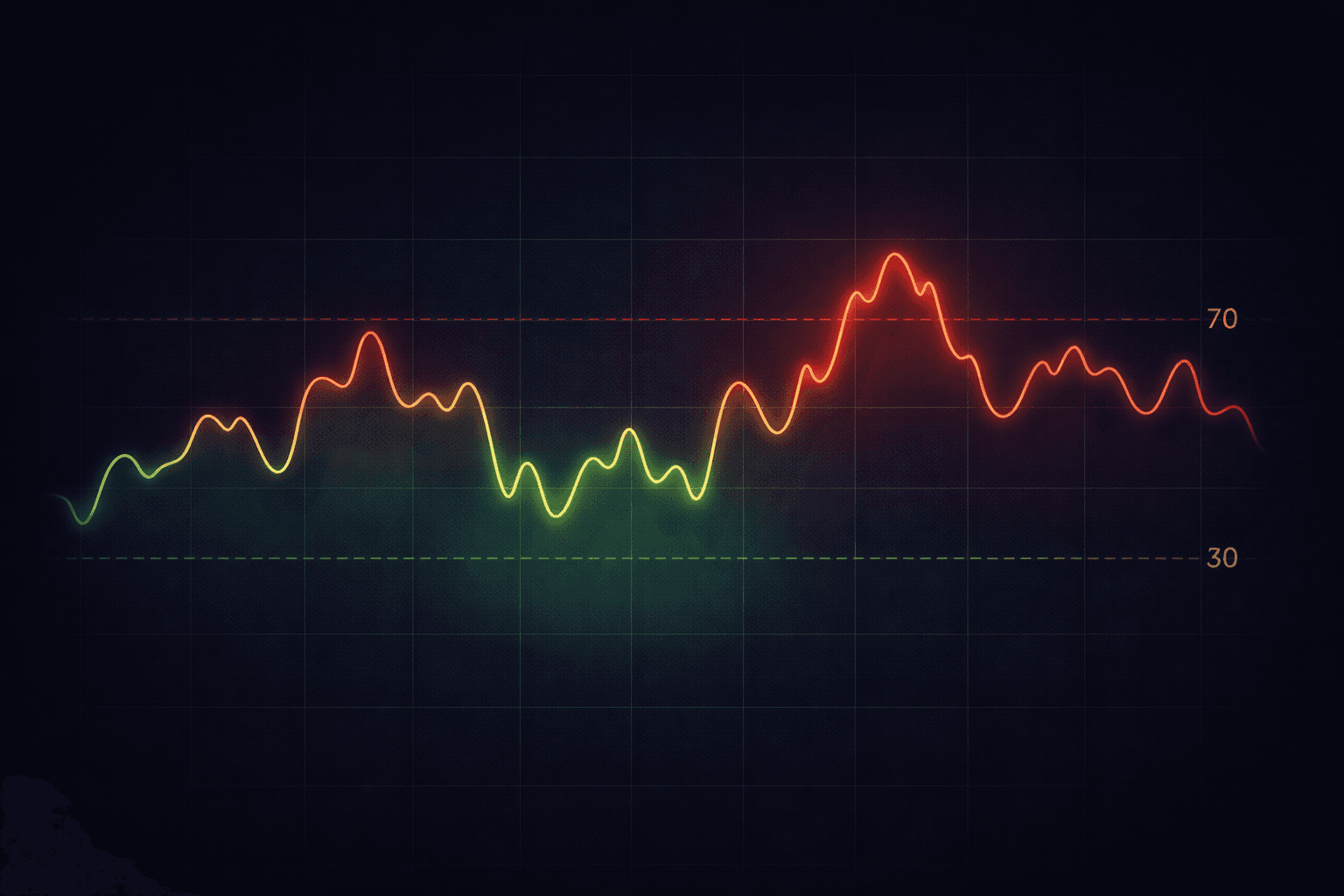
RSI explicado: cómo saber si una cripto está sobrecomprada o sobrevendida
El RSI (Índice de Fuerza Relativa) es uno de los indicadores más usados en crypto. Aprende cómo funciona, cómo leerlo y cómo evitar los errores que comete la mayoría de traders.
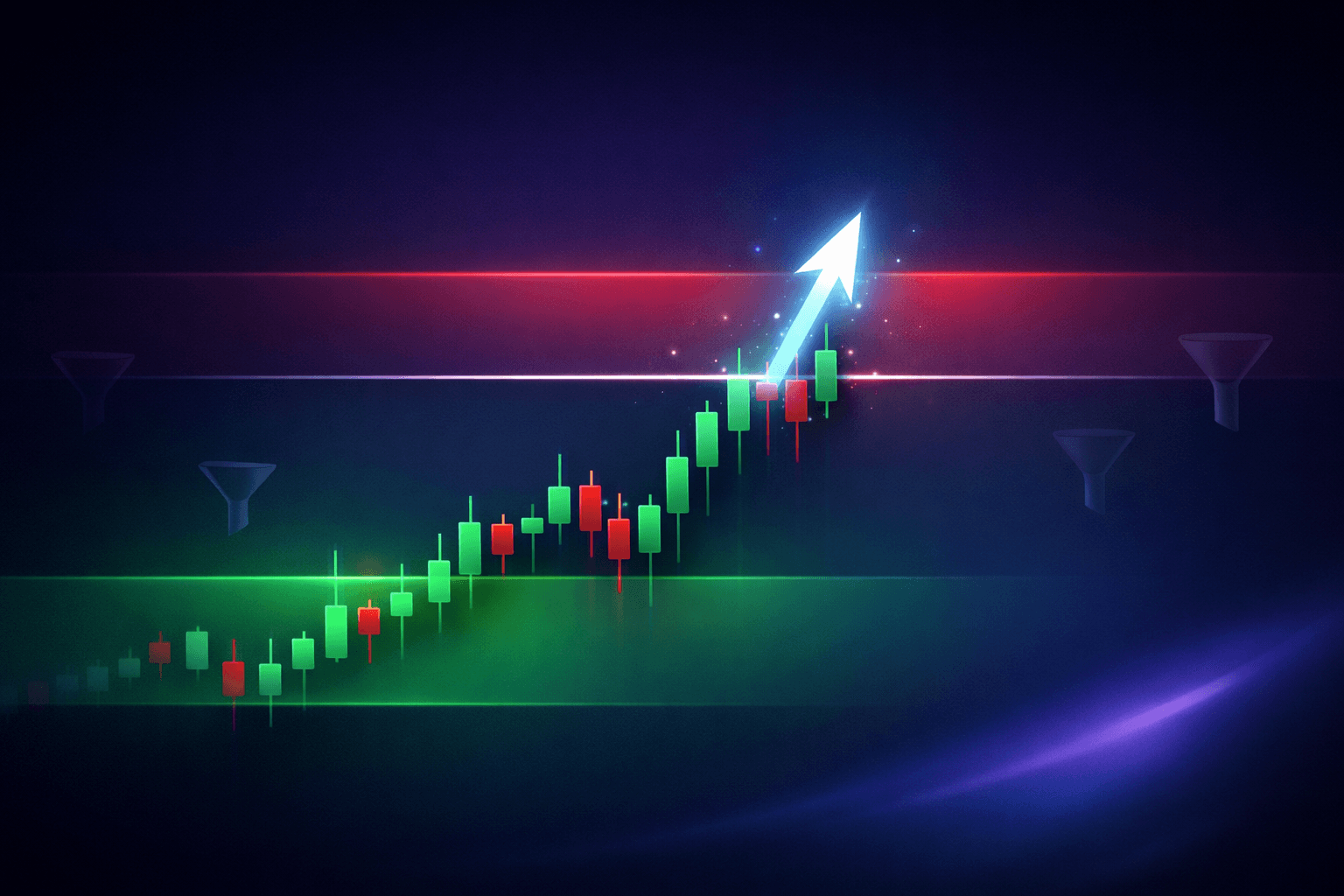
Señales de Ruptura en Altcoins: Cómo Atrapar el Momentum Antes que la Multitud
Tasas de financiamiento, picos de volumen e indicadores técnicos — las tres señales que aparecen antes de que una altcoin rompa, no después. Así se leen juntas para adelantarte a los movimientos de momentum.